

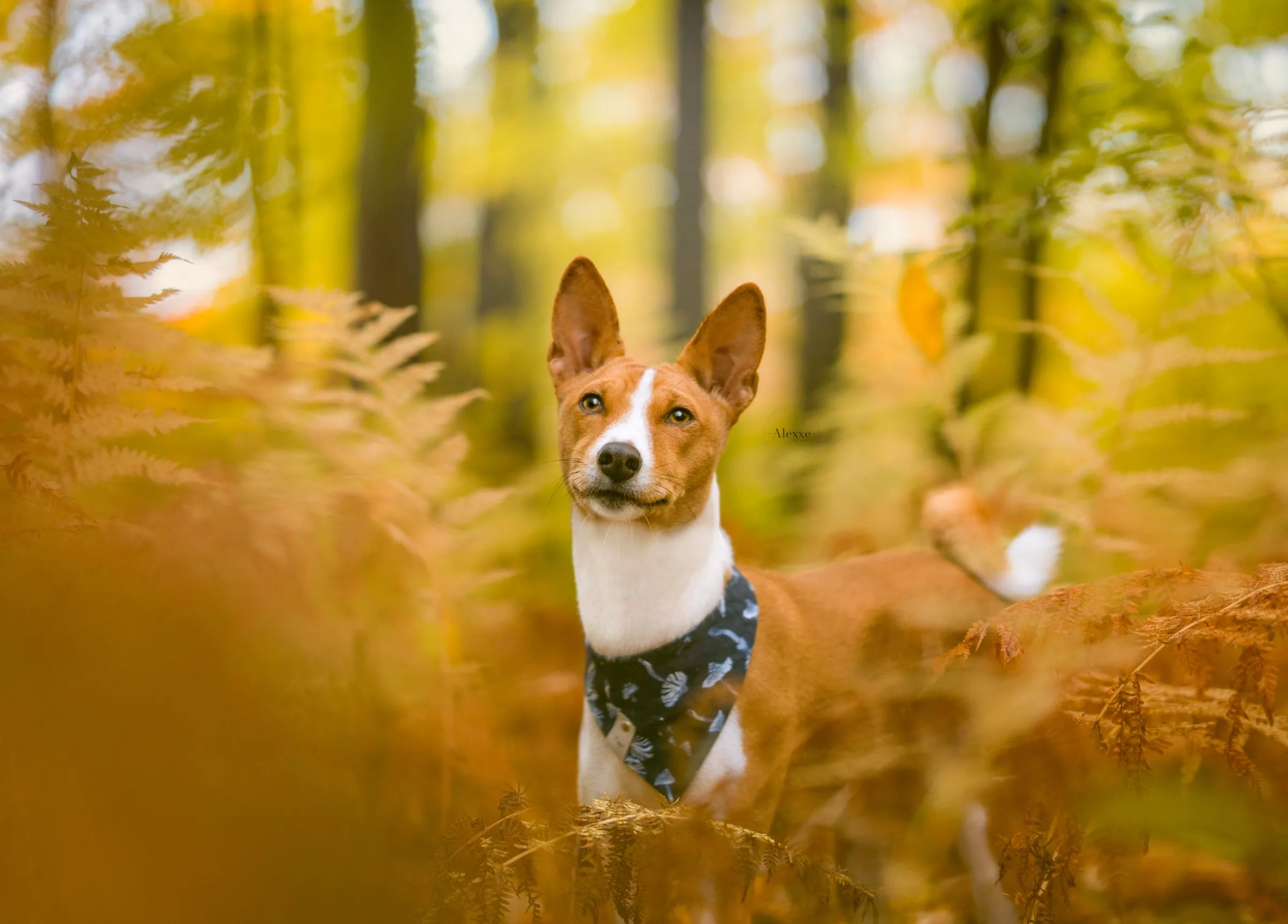
The Basenji
A free spirit that calls for a real meeting.
Its history, health, standard and temperament — to understand the breed before welcoming one home.
History
One of the oldest known breeds
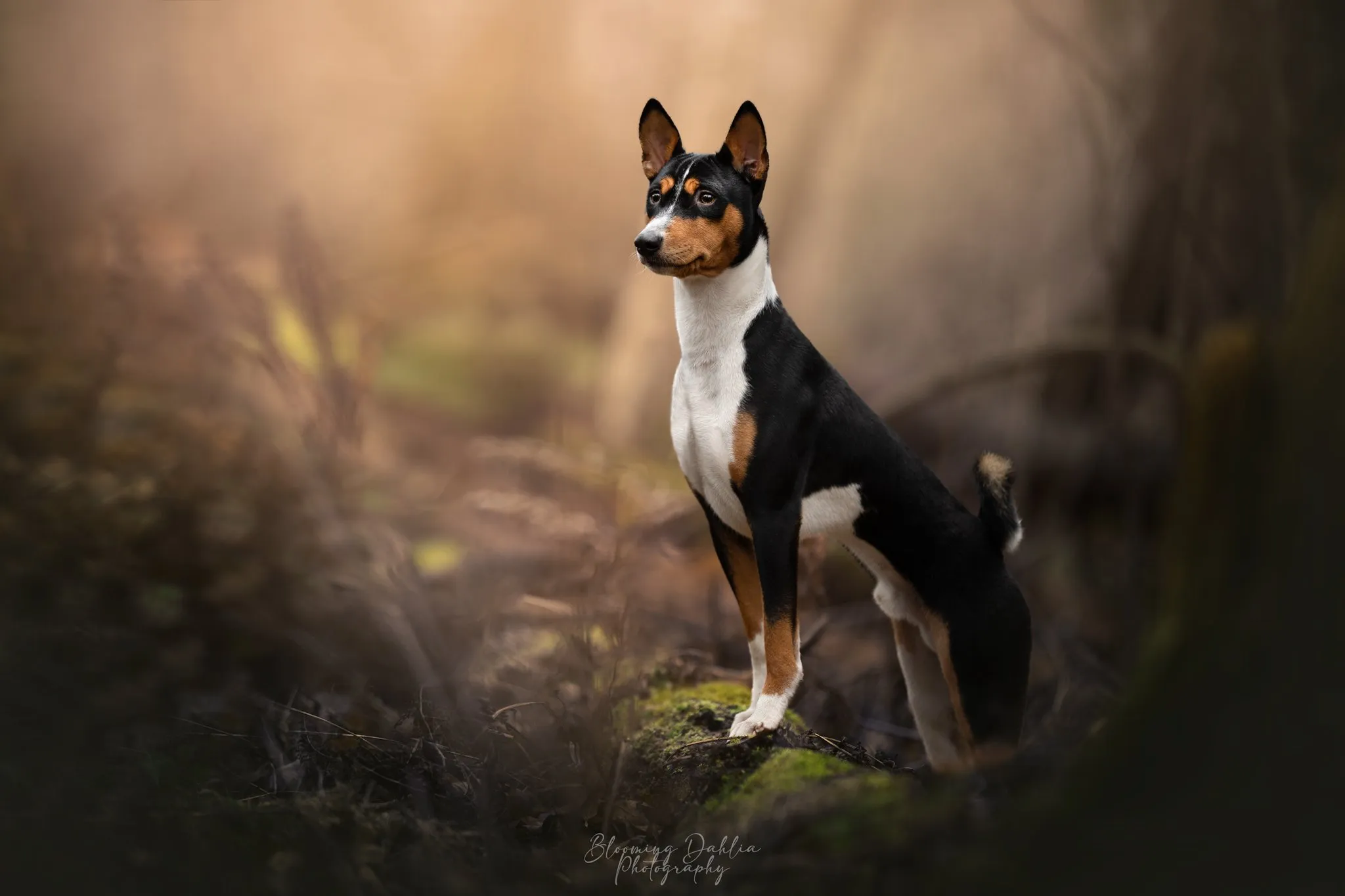
The Basenji is widely regarded as one of the oldest breeds known today: traces of its existence date back to the time of the pyramids, some 6,000 years ago. It was in the 19th century, however, that it was “discovered” in its native habitat, the Congo Basin, where it still lives today alongside the Pygmy peoples.
The people of the Congo made it their companion and hunting partner, a collaboration thousands of years old. Free to roam where it pleases, it can sleep in the huts and is valued as much as the human members of the community. In return, the pack helps the hunters and follows them on expeditions. Naturally alert, it also guards the village. Because it is silent by nature, the dogs wear a bell around their neck so they can be found once the prey is surrounded. The Basenji makes all kinds of sounds — growls, howls and vocalizations all its own — but it cannot bark like other dogs because its larynx is flat.
Most domestic dogs were created with a specific purpose in mind. Not the Basenji: it arrived in Europe and North America already “ready-made”. Among the few changes made since are the double curl of the tail and a softer temperament. The first Basenji-type dogs reached Europe around 1880 as Congo Terriers and were shown at Crufts as early as 1895. Sadly, those first imports were all lost to distemper, as vaccines did not yet exist.
In 1936, Mrs. Olivia Burns succeeded in importing and breeding Basenjis in England. At Crufts in 1937 the breed drew strong interest, and exports to the United States and Canada followed. Imports in 1937 and 1938 broadened genetic diversity before the war interrupted everything — during which Miss Veronica Tudor-Williams did all she could to save the breed. Breeders then went on to establish the Basenji as we know it today.
Health
A generally healthy breed
The Basenji is a generally healthy breed. As with any responsible breeding program, it’s important to know the breed’s specific concerns and to complete every necessary health test to avoid passing disease on to puppies.
OFA-recommended tests for the breed
- Eyes — yearly
- Hips — from 2 years
- Thyroid — yearly
- PRA (Basenji night blindness) — DNA test
- Fanconi — DNA test
Genetic diversity
Basenjis have a high coefficient of inbreeding (COI), because the breeding population has remained relatively small over the years. The AKC has approved certain matings with dogs brought directly from Africa to broaden the gene pool.
Unlike most domestic dogs, Basenji females come into season only once a year, usually in the fall.
The standard
Light, square and aristocratic
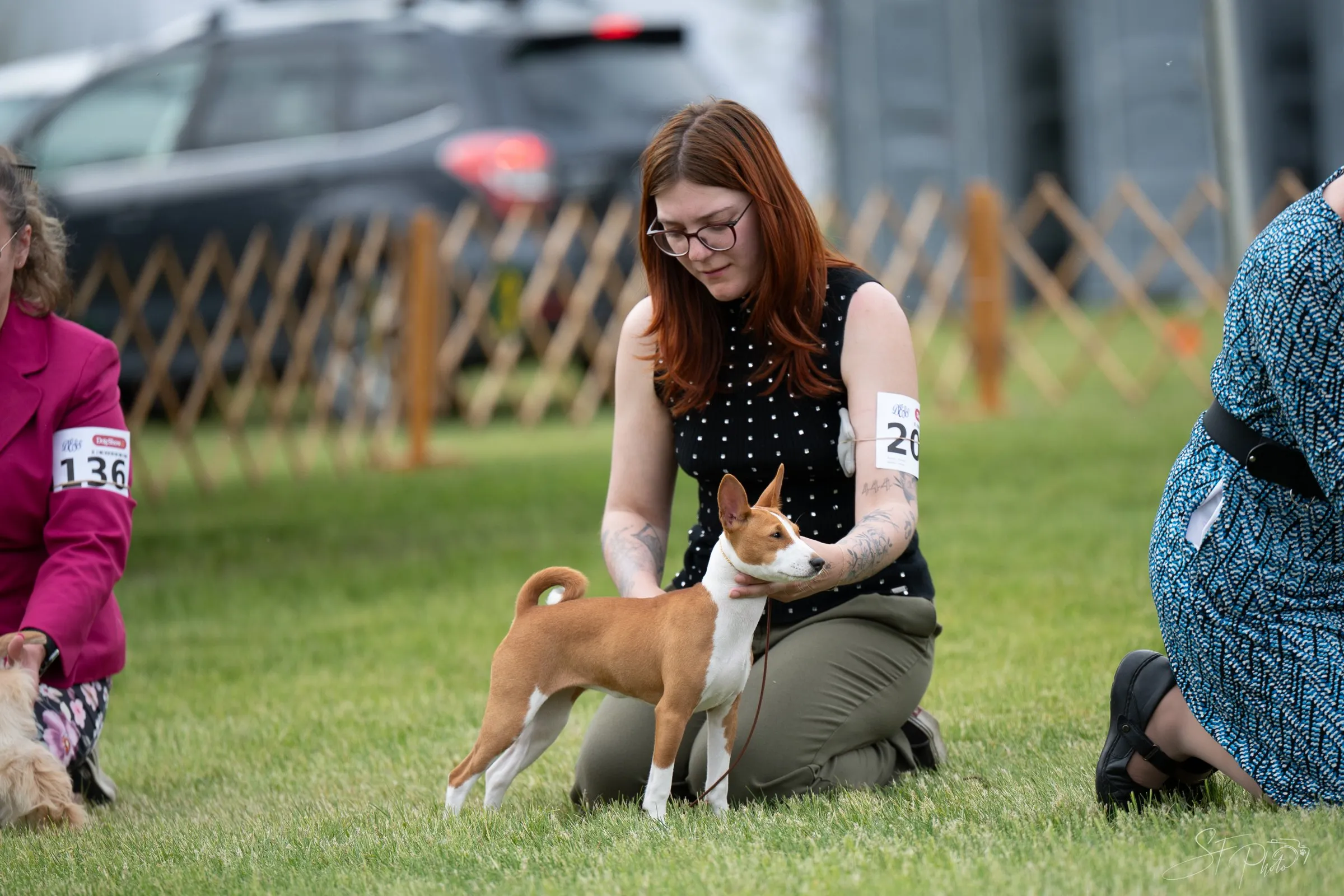
The Basenji is lightly built and fine-boned, high on the leg relative to its length. The standard describes its bearing as aristocratic. The head is wrinkled, the ears are erect, and the dark, almond-shaped eyes are set obliquely.
The neck is well arched; the deep chest rises to a well-defined tuck-up. The high-set tail curls tightly over the spine and lies against the thigh in a single or double curl. The Basenji is square: as tall as it is long. The coat is short, sleek, close and very fine.
Fun fact: Basenjis run with a double-suspension gallop, just like sighthounds!
| Male | Female | |
|---|---|---|
| Height | 17 in (± 1 in) | 16 in (± 1 in) |
| Weight | 21–24 lb | 20–22 lb |
- Colours: red & white, black & white, tricolour (black, tan & white), brindle & white. Feet, tail tip and chest are white.
- Coat: short and flat, minimal grooming
- CKC and AKC classification: Hounds (Group 2)
- Distinctive traits: erect ears, corkscrew tail
Temperament
A pack dog, close to its instincts
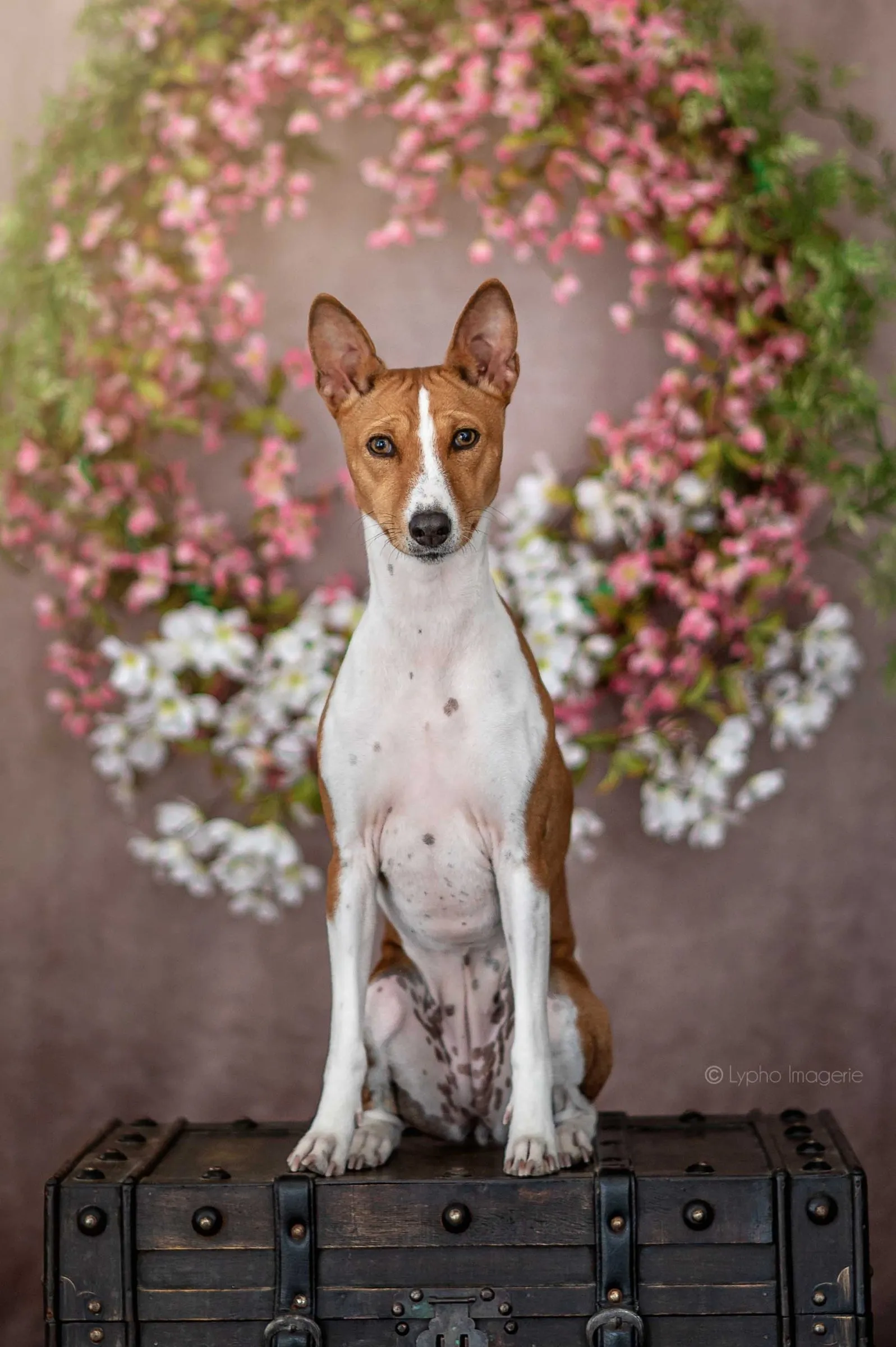
Above all, it’s important to understand that the Basenji is a pack dog, very close to its primal needs. It will bask in the sun with its companions, chase small animals and sniff everything in its path. It will include you in its pack and curl up against you for warmth and to show its love.
Basenjis don’t bark — but they are not silent! Their call is often compared to a chortle or a kind of yodel. They use their voice and grumbles to communicate with you and with other dogs: it isn’t aggression, just a very expressive dog. The breed is described as intelligent, independent, stubborn, affectionate and active, and reserved with strangers.
A Basenji isn’t out to please its owner: living with one means learning to compromise and, above all, keeping a good sense of humour. It will act on its own terms, according to what benefits it most.
Basenjis usually mature around 3 years old and then become more selective about the dogs — and even the people — they meet. Make sure first meetings are positive and well managed to reduce the risk of incidents.
This is not a breed for everyone, and certainly not an easy one. Do your research before adopting a Basenji, and make sure you can meet its needs once it joins your family.
Needs
Day to day
| Need | Day to day |
|---|---|
| Exercise | 45 min to 1 hour a day |
| Chewing | 1 chew activity a day |
| Mental stimulation | 1 puzzle or short training session a day |
| Energy level | Medium to high |
| Tolerance for being alone | Low |
| Life expectancy | 12 to 14 years |